


 Hello! You are about to leave publix.com and enter the Instacart site that they operate and control. Publix’s delivery and curbside pickup item prices are higher than item prices in physical store locations. Prices are based on data collected in-store and are subject to delays and errors. Fees, tips & taxes may apply. Subject to terms & availability. Publix Liquors orders cannot be combined with grocery delivery. Drink responsibly. Be 21. For prescription delivery, log in to your pharmacy account by using the Publix Pharmacy app or visiting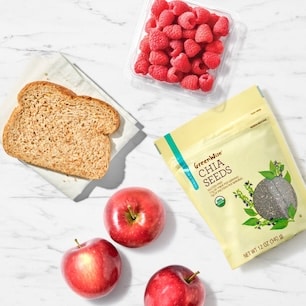
Published July 1, 2026
When you look at a nutrition facts panel, you’ll find a listing in the carbohydrates section that’s often overlooked: dietary fiber. It’s notably different from other carbohydrates and an important part of your diet.
What is fiber?
All dietary fiber comes from plants, showing up in fruits, vegetables, whole grains, nuts, seeds, and beans. The body doesn’t digest or absorb it like it does other carbohydrates, but fiber performs other essential functions.1 The two types of fiber—soluble and insoluble—each play an important role.
Soluble fiber, so named because it can dissolve in water, forms a gel-like substance in the body that slows digestion. This is beneficial, as it helps lower blood sugar levels and cholesterol. Soluble fiber can be found in foods such as oats, bananas, avocados, and carrots.
Insoluble fiber does not dissolve in water. It improves digestion by adding bulk and helping food move through your system. Insoluble fiber can be found in foods such as whole wheat flour, nuts, beans, and potatoes.1
Why do you need fiber?
Beyond helping with digestion, fiber is tied to improved gut health and weight management.2 (And here’s a bonus: Many fiber-rich foods contain prebiotics as well. Learn about them in our "Promoting Digestive Wellness" article.)
Low-fiber diets, on the other hand, have been linked to diseases such as irritable bowel syndrome, diabetes, obesity, cardiovascular disease, and colon cancer.3
How much fiber should I get?
According to the American Society for Nutrition, “Only 5% of men and 9% of women are getting the recommended daily amount of dietary fiber.”4 With fad diets encouraging the avoidance of carbohydrates, this staggering statistic might not surprise you.
Current US dietary guidelines recommend that we prioritize fiber-rich whole grains5 and that people aged 2 and older get 14 grams of fiber for every 1,000 calories in their daily diet.6
| Food | Fiber in grams per serving |
|---|---|
| Flax Seeds (1 tablespoon) |
2.8 |
| Chia Seeds (1 tablespoon) |
4.1 |
| Apple with Skin (1 medium) |
4.8 |
| Broccoli (1 cup cooked) |
5.2 |
| Pumpkin Seeds (1 oz) |
5.2 |
| Bran Flakes (3/4 cup) |
5.5 |
| Sweet Potato (1 cup cooked) |
6.3 |
| Blackberries (1 cup) |
7.6 |
| Raspberries (1 cup) |
8 |
| Green Peas (1 cup cooked) |
8.8 |
| Guava (1 cup) |
8.9 |
How can I get more fiber in my diet?
Here are a few tips:
Home in on whole grains. Whole grain options provide more than twice the naturally occurring fiber as their refined counterparts.7 For example, a slice of white bread typically has less than 1 gram of fiber, whereas a slice of 100% whole wheat bread typically has at least 2 grams.
Incorporate seeds. Add a seed topping to your favorite foods. As you can see in the table, just a tablespoon of chia seeds provides 4.1 grams of fiber, and flax seeds provide 2.8 grams.8 Sprinkle some on top of your yogurt, breakfast cereal, smoothie, or stir fry. These seeds provide an instant nutrient boost without much flavor impact.
Start early. Get off to the right start with a fibrous breakfast. Choose a cereal that qualifies as a “good source” or “excellent source” of fiber, and consider topping it with fruit or seeds for an additional boost.
Snack smart. Make sure you’re incorporating a fiber source into your snacks. For example, pair whole grain pretzels with your serving of cheese, or whole-grain pita chips with your hummus. Find more ideas in our "Purposeful Snack Hacks" article.
Put away the peeler. A large portion of the fiber in fruits and vegetables is found in the skin. So consider keeping the skin on foods like apples, potatoes, and carrots.9
Shop intentionally. Look for packaging claims like “good source” or “excellent source” of fiber. A “good” source means that a product provides at least 10% of the daily value (DV) of fiber, or roughly 2.5 grams per serving, and an “excellent” source means it has 20% or more of the DV—about 5 grams.10
Supplement if necessary. Some situations make it difficult to get enough fiber through food in your diet. If that’s your case, fiber supplements might be an option to consider. Talk to your healthcare provider before adding supplements into your routine.
Speak with a doctor or dietitian before embarking on any extreme fiber regimens, or if you have any underlying health conditions that may influence your body’s fiber needs.
Fiber up!
Getting enough fiber doesn’t have to be hard. You can make small modifications to your food choices throughout the day and greatly improve your overall fiber consumption.
Want to learn more? Reach out to publix.dietitian@publix.com with questions like: “Are any drinks high in fiber?” Or send us your favorite fiber hack! We’d love to hear from you.
Publix Health & Wellness.
Each wellness journey is uniquely personal. It's about achieving your goals and feeling your best. Explore more dietitian-curated topics, resources, tips, and products that speak to you.
Sources:
1School of Public Health. Fiber. Harvard T.H. Chan. Last modified April 2022.
2Fu, Jiongxing, Yan Zheng, Ying Gao, and Wanghong Xu. Dietary Fiber Intake and Gut Microbiota in Human Health. PubMed Central. National Library of Medicine. December 18, 2022.
3National Library of Medicine. Fiber. MedlinePlus. Last modified July 23, 2024.
4American Society for Nutrition. Most Americans Are Not Getting Enough Fiber in Our Diets. June 9, 2021.
5U.S. Department of Agriculture & U.S. Department of Health and Human Services. Dietary Guidelines for Americans, 2025–2030, 10th ed. December 2025. Available at DietaryGuidelines.gov.
6Chart of High-Fiber Foods. Mayo Clinic. December 24, 2025.
7Shewry, Peter R., Edward J. M. Joy, Lucia Segovia De La Revilla, Annalene Hansen, Joe Brennan, and Alison Lovegrove. Increasing Fibre in White Flour and Bread: Implications for Health and Processing. PubMed Central. National Library of Medicine. October 31, 2023.
8Food Sources of Fiber. U.S. Department of Agriculture. Accessed March 16, 2026.
9Bhardwaj, Kanchan, Agnieszka Najda, Ruchi Sharma, Renata Nurzyńska-Wierdak, and Daljeet Singh Dhanjal, et al. Fruit and Vegetable Peel-Enriched Functional Foods: Potential Avenues and Health Perspectives. Evidence-Based Complementary and Alternative Medicine, 2022, 8543881, 14 pages, 2022.
10LeWine, Howard E., ed. "Eat More Fiber-Rich Foods to Foster Heart Health." Harvard Health Publishing. Harvard Medical School. February 5, 2024.