


 Hello! You are about to leave publix.com and enter the Instacart site that they operate and control. Publix’s delivery and curbside pickup item prices are higher than item prices in physical store locations. Prices are based on data collected in-store and are subject to delays and errors. Fees, tips & taxes may apply. Subject to terms & availability. Publix Liquors orders cannot be combined with grocery delivery. Drink responsibly. Be 21. For prescription delivery, log in to your pharmacy account by using the Publix Pharmacy app or visiting
Updated August 1, 2026
Protein is an important part of your daily diet. Your body needs it to build, maintain, and repair the cells that make up your bones, muscles, skin, and other tissues.1 Learn more about the power of protein and how to choose a variety of foods that deliver the protein you need.
How much protein should I have daily?
The Dietary Guidelines for Americans, 2025–2030, recommends 1.2–1.6 grams of protein per kilogram of body weight.2 This amounts to about 82–109 grams of protein per day for someone weighing 150 pounds. Certain groups, including active and older adults, may benefit from higher protein intakes.3
Can protein help me lose weight?
Protein increases the feeling of fullness you get after you finish a meal. Include protein in your meals and snacks to help you stay satisfied.
Increasing your protein intake may help with weight loss if it doesn’t mean eating excess calories. Research suggests that at least 30 grams of protein per meal may help increase your feeling of fullness, which may help you maintain the calorie deficit to lose weight.4
Can protein help me gain muscle?
Yes, protein can promote muscle mass. According to the International Society of Sports Nutrition, an overall daily intake of 1.4–2 grams of protein per kilogram of body weight is sufficient for most people who exercise.5 For someone weighing 150 pounds, that would mean approximately 95–136 grams of protein per day. But even if you are not a bodybuilder or avid gym enthusiast, it’s still important to get enough protein in your diet to prevent the loss of lean muscle mass that occurs as we age.
Consult your physician or registered dietitian to find out how much protein fits your needs.
Which foods should I eat for protein?
When it comes to protein, quality and variety are important. Focus on choosing diverse protein sources that include nutrient-dense and plant-based options. Add a variety of protein foods into your routine, incorporating seafood, lean meats and poultry, eggs, legumes (beans and peas), nuts and seeds, and soy products. Combining different protein sources in the same meal isn’t necessary.6
Here are some pointers to help you make wise protein choices.
- Beef: Look for cuts with “round” or “loin” in the name—top round steak, top loin steak, or tenderloin. Choose ground beef with a higher lean-to-fat ratio, such as 90/10 or 93/7.
- Pork: Again, find round or loin cuts, such as pork loin, tenderloin, and center loin.
- Poultry: Start with skinless white meat chicken or try skinless dark meat cuts or lean ground turkey.
- Seafood: Eat seafood at least twice a week. Great choices include omega-3 sources such as salmon, trout, oysters, crab, mussels, catfish, clams, and flounder.7
- Eggs: Add eggs to your weekly routine beyond breakfast in frittatas, sandwiches, fried rice, and other dishes.
- Dairy: You can eat or drink your dairy—include milk, yogurt, and cheeses in your diet.
- Plant-based: Whether you’re vegan or vegetarian or you’re just trying to eat more plant-based foods, Publix offers a variety of options.
Where can I find plant-based proteins?
Here are some good ways to add different plant-based proteins into your meal plan.
- Nuts and seeds: Enjoy unsalted or lightly salted nuts or seeds as a snack, on salads, or in main dishes. Eat small portions to keep calories in check. Check out our Publix snacks, such as sunflower seeds and cashews, located in the Produce department.
- Beans: Choose reduced-sodium or no-salt-added canned beans, such as GreenWise low-sodium canned beans, or simply drain and rinse canned beans to reduce the sodium. Or prepare Publix or GreenWise dry beans for your favorite recipe. Try our Hearty Potato and Lentil Salad with asparagus and arugula.
- Meat alternatives: Try our variety of meatless protein options, such as tofu and tempeh in our Produce department, as well as meatless burgers and entrées in our frozen section.
- Better choices: Look for our Better Choice shelf tags that can help you make small shifts in your food choices within certain categories of products. When compared to similar foods, the tags identify items that have more of the nutrients you need, like fiber, and less of the things you don’t need, like saturated fat, added sodium, or added sugar.
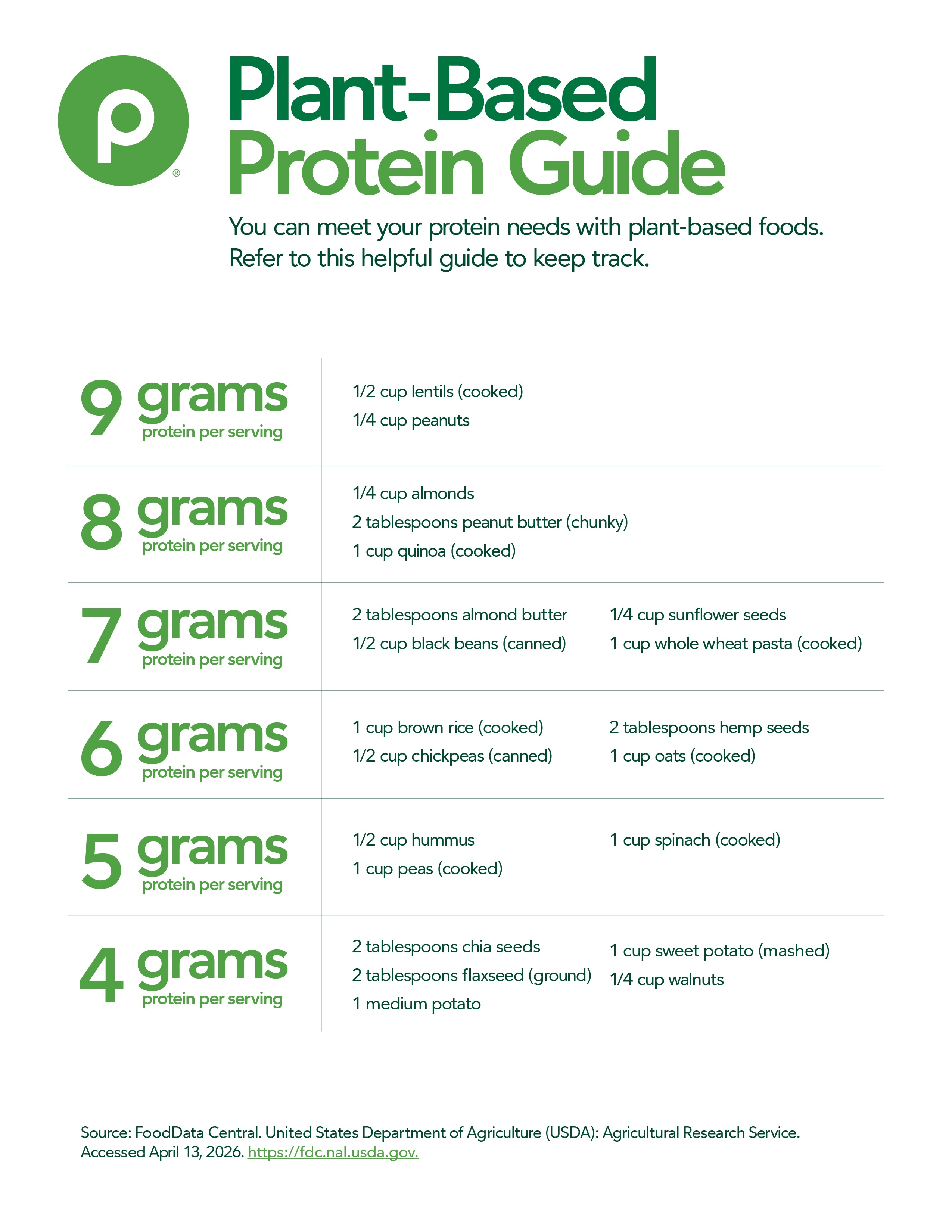
If you want more ways to get protein through plants, check out our articles about plant-based eating styles.
Publix Health & Wellness.
Each wellness journey is uniquely personal. It's about achieving your goals and feeling your best. Explore more dietitian-curated topics, resources, tips, and products that speak to you.
Sources
1National Library of Medicine. Dietary Proteins. MedlinePlus. July 17, 2024.
2U.S. Department of Agriculture & U.S. Department of Health and Human Services. Dietary Guidelines for Americans, 2025–2030, 10th ed. December 2025. Available at DietaryGuidelines.gov.
3National Council on Aging. What Are the Best Sources of Protein? Here’s What to Know. Dec 18, 2025.
4Watson, Anthony W., Anna Brooks, Lucy Moore, Sophie Barley, and Adrian Holliday. The Effect of Consuming Different Dietary Protein Sources at Breakfast. PubMed Central. National Library of Medicine. November 12, 2025.
5Jäger, Ralf, Chad M. Kerksick, Bill I. Campbell, Paul J. Cribb, Shawn D. Wells, Tim M. Skwiat, Martin Purpura, et al. 2017. International Society of Sports Nutrition Position Stand: Protein and Exercise. Journal of the International Society of Sports Nutrition 14 (1). doi:10.1186/s12970-017-0177-8.
6Palmer, Sharon. Protein in Vegetarian and Vegan Diets. Eat right. Accessed April 13, 2026.
7Which Fish Is the Richest in Omega-3s? Seafood Nutrition Partnership. Accessed April 13, 2026.